
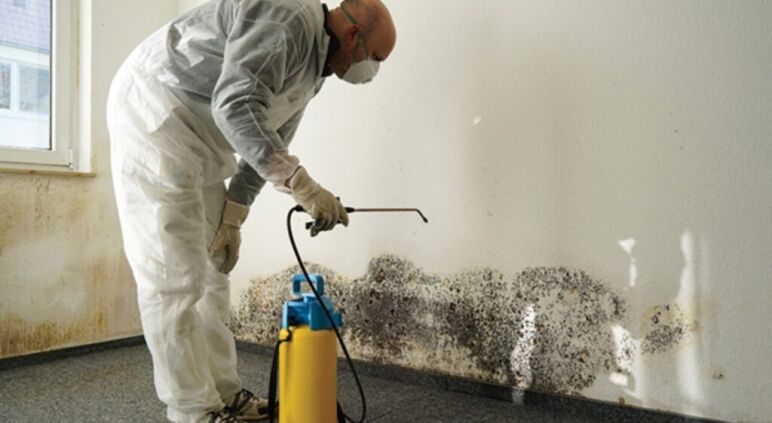
If you have found mould at home, the useful next step is to work out what is still damp and what materials are affected, then agree a scope for mould remediation. This page explains typical techniques. It is not a medical guide, and it does not guarantee a health or insurance outcome.
What causes mould indoors
Mould needs moisture, time and a material it can grow on. It often appears where humid air sits on cool surfaces, or where a leak has wet plasterboard, timber, carpet or insulation. Growth can start within 24 to 48 hours if those materials stay damp, sometimes out of sight.
For health concerns, talk to a doctor. NSW Health has public information on mould and dampness in the home. An assessment looks at moisture and materials; it cannot diagnose or treat illness.
Typical remediation steps
- Assessment. Find the moisture source and map what is still wet, including concealed spaces.
- Containment. Limit the spread of spores while the work is underway.
- Removal or cleaning. Remove affected porous material as agreed, and clean remaining surfaces.
- Drying. Dry the structure and monitor moisture readings.
- Records. Photographs, readings and the agreed scope, for you and your insurer.
Call-out is $198 inc GST. After hours and on weekends, a $375 inc GST travel charge also applies. Any further work is quoted before it starts.
Your insurer decides cover. Reztor documents the work; the insurer decides cover.
We assess the moisture, contain and remove affected material as agreed, and record the work. We do not guarantee a health outcome. Reztor’s own team works across Queensland, New South Wales and Victoria. Call 1800 739 867, day or night. We’ll confirm attendance time for your address when you call.