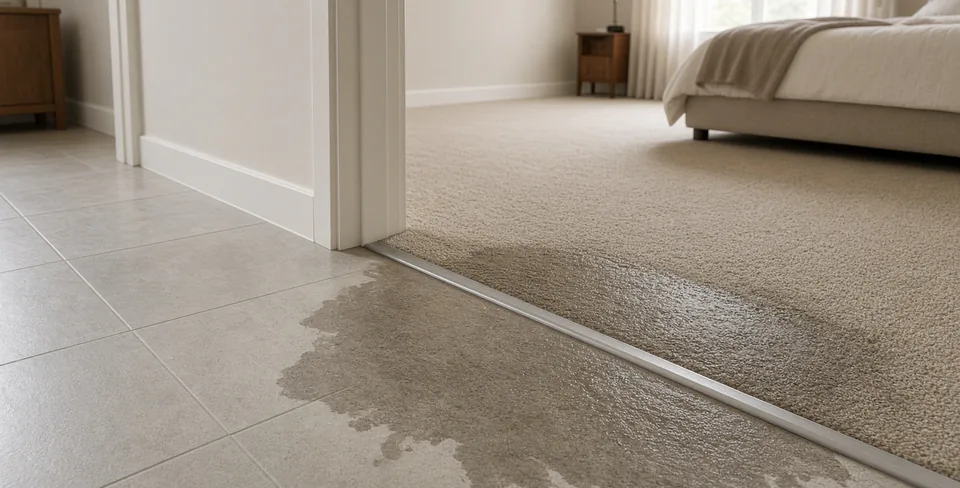
Do not use a household dry vacuum to collect water. Avoid lifting fitted carpet or running fans where contamination or visible mould may be present. Read the first-actions guide →
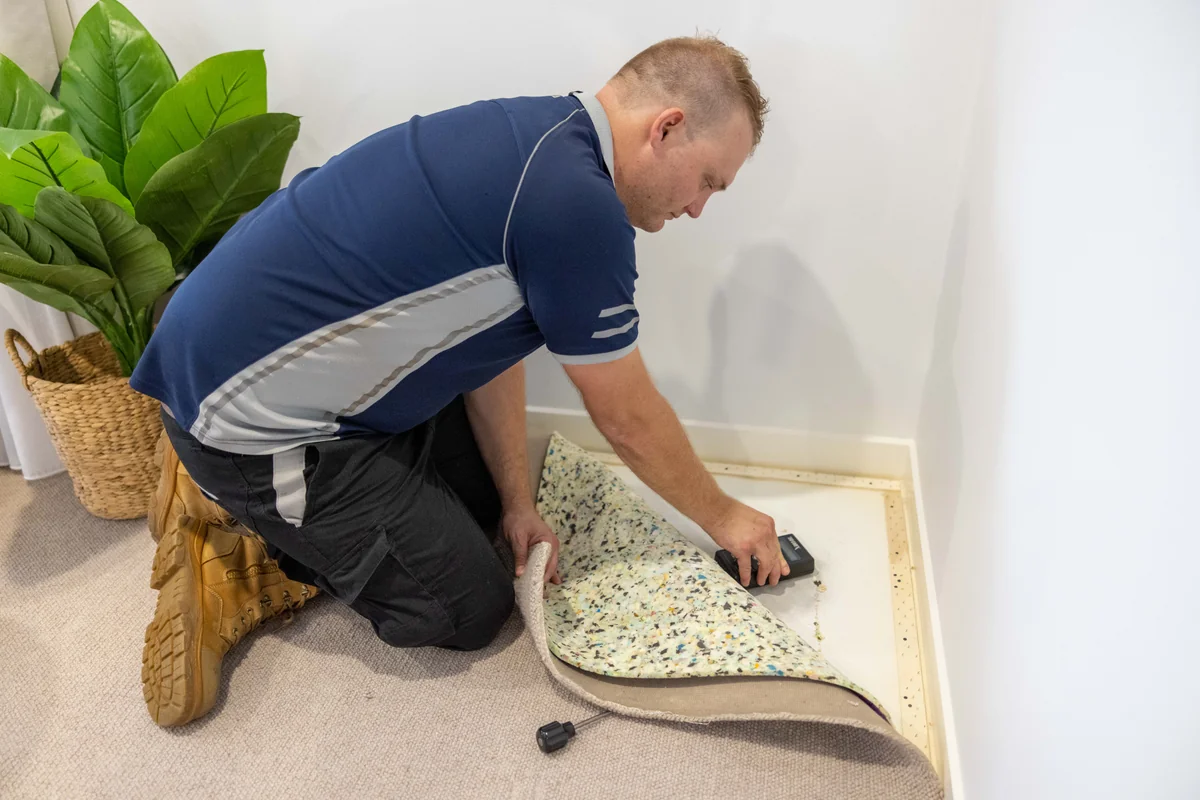
Reztor carpet assessment. The carpet, underlay and floor beneath need individual checks.
Look beyond the surface
The carpet is only the top layer.
A surface that feels dry can leave unanswered questions below. Assessment considers the complete floor assembly and nearby affected areas.
01
Carpet & backing
The pile may lose visible moisture before its backing. Staining, separation and overall condition also influence the options.
02
Underlay
The layer beneath can hold moisture. Its material and condition help determine whether it can be retained or needs removal.
03
Subfloor & edges
Timber, concrete, skirtings and adjoining finishes may need checking. Drying the carpet face alone does not resolve every affected layer.
Water source, time, contamination, material condition and access all matter. The recommendation should explain what can be retained and why.
01Carpet
Retention depends on whether it can be appropriately cleaned and dried, and on damage to the backing or fibres. Contamination or deterioration may require removal.
02Underlay
Saving the carpet does not always mean saving its underlay. Assess this layer separately; removal may be needed to address its condition or reach the floor beneath.
03Timber or concrete subfloor
Check the supporting surface before covering it again. Moisture conditions and material damage determine the drying, access or repair work required.
04Adjacent flooring & room edges
Water may extend beyond the carpet. Nearby timber, laminate, resilient finishes and wall bases may need further assessment or specialist advice.
These are assessment considerations, not a promise that every material can be saved. Photos cannot confirm the condition of concealed layers.
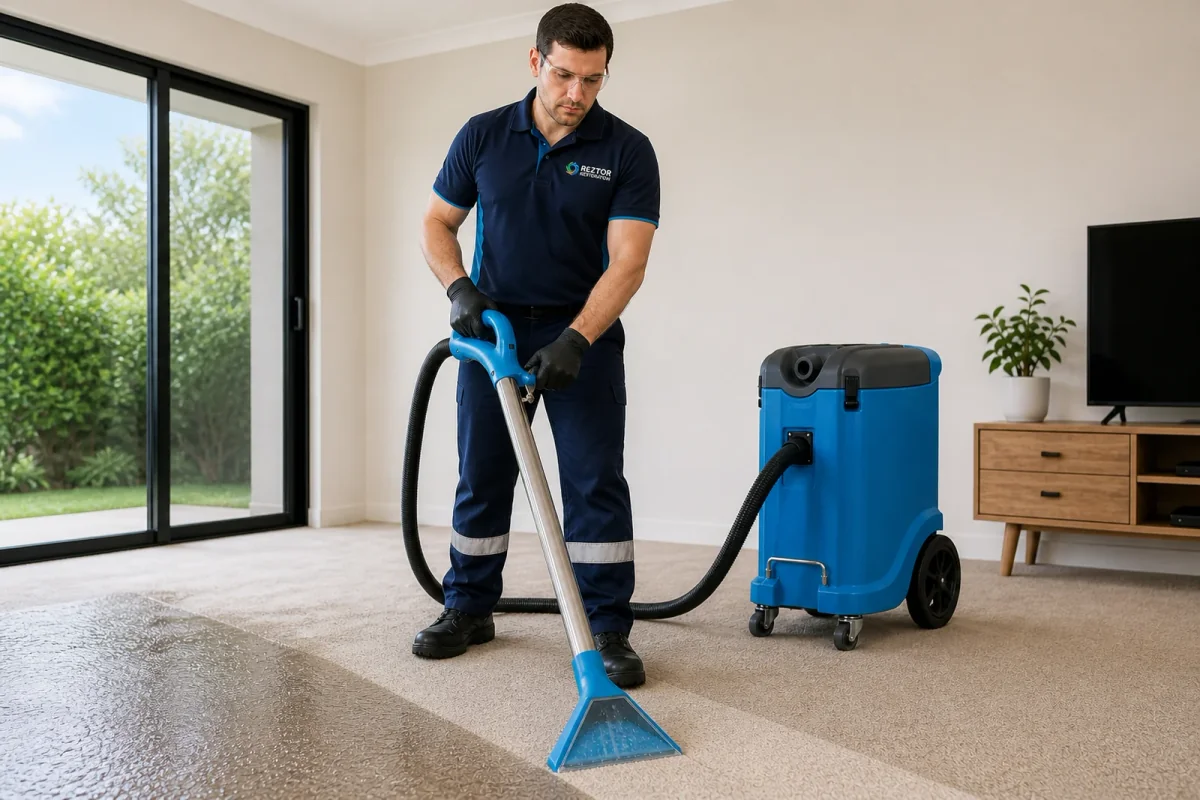
Extraction removes excess water. The remaining work depends on what is wet, what can be retained and how the materials respond.
Extraction illustration. Equipment and methods depend on the assessed conditions.
01
Assess the source and extent
Review the incident, inspect accessible layers and record relevant conditions. Identify any safety issues or source repair that needs a qualified trade.
02
Agree what stays and what goes
Explain retention, access and removal decisions before the relevant work proceeds. Clarify furniture movement and any separate repair responsibilities.
03
Extract and set up drying
Remove excess water where appropriate, then arrange drying equipment for the assessed materials and room conditions.
04
Monitor and adjust
Review moisture information and conditions as drying progresses. Explain changes to the plan if concealed damage or other limits become apparent.
05
Review and hand over
Explain the final findings and remaining work, including cleaning, relaying, replacement or source repairs where applicable. Confirm what is included in the agreed scope.
Unsure whether drying is still an option?
Tell us when the carpet became wet and what you have noticed. We can help you understand what needs checking.
A useful scope explains the work and what could change it. Ask these questions before it proceeds.
01
How long will it take?
Extent, materials, access and conditions affect timing. Progress checks guide the drying stage; a surface that feels dry is not the only completion check.
02
What affects cost and access?
Extraction, equipment, monitoring, removal and furniture access influence the scope. Ask about room use, equipment noise, electricity and any separate cleaning or relaying costs.
03
Will insurance cover it?
Notify your insurer and ask about cover and authorisation before committing to work. Keep photos and records. Your policy and insurer determine the claim outcome.
No. The water source, time, contamination, material damage and ability to clean and dry the affected layers determine the options. The carpet and underlay may need different decisions.
Is water extraction the same as drying?
No. Extraction removes excess water. Retained materials may still need controlled drying and checks of the carpet, underlay and floor beneath.
Does wet underlay always need replacing?
Not automatically. Its material, contamination and condition matter. Even when carpet can be retained, underlay may require removal or replacement.
Can the carpet be dried without lifting it?
Sometimes. The decision depends on access, the installation and the affected layers. Avoid lifting fitted carpet yourself where hazards or contamination may be present.
Can I use fans or a household vacuum?
Do not collect water with a vacuum designed only for dry use. Avoid fans until electrical safety and water contamination are assessed, and do not direct airflow across visible mould. Ask about suitable equipment for the situation.
How do you know when it is dry?
Relevant moisture information, material condition and the assessed drying objective guide the decision. Touch, appearance or one photograph cannot establish the condition of every layer.
What if it has been wet for several days?
Arrange assessment promptly and explain when the water first appeared. Prolonged dampness, odour or visible growth can change the response, and absorbent materials may need removal. Do not assume further drying alone will resolve it.
Does drying include cleaning, relaying and leak repairs?
These may be separate stages or require other trades. Ask which services are included, who will arrange the remaining work and whether insurer authorisation is needed.