
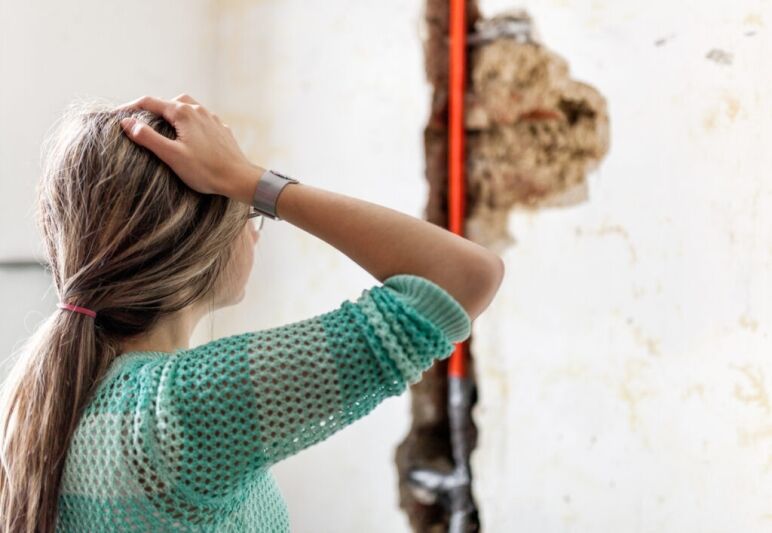
Water, fire and building damage can create physical hazards and expose people to contaminated materials. The risks depend on the incident, the materials involved and the people using the property. Visible damage or a smell alone does not establish that someone has an illness.
Keep people away from immediate danger and follow emergency-service instructions. Call Triple Zero (000) for a life-threatening emergency. If you have health concerns after exposure, seek medical advice. A property restoration assessment cannot diagnose or treat a health condition.
Check access and immediate hazards first
Queensland Health advises checking that an evacuated area has been declared safe before returning. Damaged structures, electrical systems, sharp debris and released building materials can remain hazardous after the original incident. Significant flooding or damage may require an electrician to check wiring before power is restored.
Do not enter an unsafe area to operate switches, move contents or take photographs. Read Queensland Health’s disaster health and safety guidance and follow the instructions that apply to your property.
Floodwater, wet carpets and timber flooring
Queensland Health advises assuming that anything which has contacted floodwater is contaminated. A household water leak and floodwater entering from outside may need different responses. Do not start household vacuuming, pumping or drying equipment before access, electrical safety and contamination have been assessed.
For flood clean-up or other water-damage restoration, explain the water source, affected rooms and how long materials have been wet. Ask what can be cleaned and dried, what may need removal and how the decisions will be checked.
There is no single timetable or repair method suitable for every carpet or timber floor. Condition, contamination and construction matter. Carpet repair is a separate decision after the material’s condition and suitability for retention have been assessed. Our structural drying guide explains why monitoring matters.
Mould and health concerns
NSW Health explains that people with asthma, allergies or other breathing conditions may be more sensitive to mould. People with weakened immune systems or chronic lung disease can face greater risks. Effects vary, and symptoms alone do not reliably identify mould as their cause.
Speak with your doctor about health concerns after exposure. See the NSW Health mould factsheet for medical and public-health information. For the property itself, mould assessment and remediation should consider the moisture source and affected materials. Ask what will be inspected and how proposed work will be checked.
Fire residues and persistent odours
Do not judge safe re-entry by whether smoke has cleared or the smell has faded. Queensland’s returning home safely after a fire guidance describes damaged-property hazards and specialist clean-up where asbestos may be involved.
Discuss fire and smoke restoration after access requirements are clear. Explain the materials affected, any advice from emergency services and whether residues or smells remain. Odour assessment investigates a concern; removing a smell does not, by itself, establish that every hazard is resolved.
Suspected asbestos needs separate attention
Queensland’s asbestos guidance says buildings constructed before 1990 may contain asbestos, and appearance alone cannot confirm whether a material contains it. Building age is an indicator, not a test result. Do not cut, sand, drill or disturb suspected material to investigate it yourself.
Use the official homeowner asbestos guidance and obtain appropriate specialist advice before disturbance or repairs. Tell anyone assessing the property about known asbestos records or suspected damaged materials.
Prepare for a useful assessment conversation
Tell Reztor the incident type, property location, affected areas and any known access restrictions. Ask which work is proposed, what remains uncertain and whether another trade, hygienist or specialist needs to be involved. Keep your insurer informed about evidence and approvals.
Send the property concerns, incident details and safe photos, or call 1800 739 867 to discuss restoration assistance. Only photograph areas that are safe and authorised to access.