
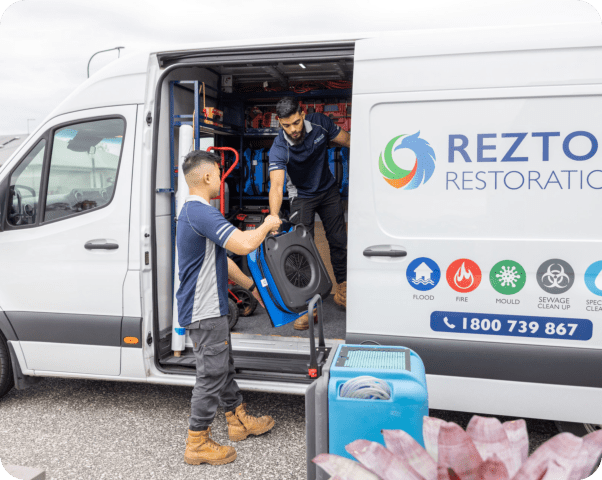
A burst pipe or flooded room needs prompt attention, even when it happens overnight. Early contact can help organise assessment and water removal, but safety, the water source and access to the property come first. This article explains why 24 hour water extraction matters and what needs to happen after the visible water is removed.
Why early water removal matters
Water can move beyond the area you can see, reaching carpet underlay, flooring and wall cavities. Removing accessible standing water is one part of the response; it does not establish that the building is dry or that every affected material can be retained.
The EPA recommends prompt drying of water-damaged materials, with 24–48 hours an important prevention window for mould. That is a reason to act early, rather than a reliable countdown for when mould or structural damage will begin. Conditions and the materials involved need assessment. If growth is already present, discuss mould assessment and remediation as part of the response.
Put safety before extraction
Keep clear of standing water where electrical hazards may be present. Do not touch water-affected electrical equipment or enter an unsafe building to retrieve items or take photographs. Queensland Health advises that significant flood damage may require an electrician to check wiring before power is restored, and that anything in contact with floodwater should be assumed contaminated.
Sewage, outside floodwater and an unknown water source need appropriate assessment. Do not assume water is clean because it looks clear. For safe immediate steps, read what to do in the first hours after water damage.
What 24/7 contact means for your enquiry
Call 1800 739 867 for 24/7 emergency water-damage advice. Explain the location, when the incident began, whether water is still entering and any known hazards. The team can discuss access and the next available response. Confirm attendance arrangements directly; around-the-clock contact is not a fixed arrival-time guarantee.
What happens after you contact Reztor?
- Assess the affected area. A water-damage assessment helps establish the source, affected materials and areas needing further investigation.
- Plan water removal. Water extraction addresses accessible water using equipment and methods suited to the conditions. Contamination and access can change the approach.
- Check remaining moisture. Structural drying may be needed for wet materials after extraction. Monitoring helps inform progress and further decisions.
- Agree the next steps. Ask which materials can be assessed for drying, what may need removal, and what documentation or approval is needed before further work.
Prepare the details for a useful first conversation
Have your suburb or postcode, contact number, affected rooms and approximate incident time ready. If safe photographs are already available, send the incident details and photos. For an urgent situation, use the phone number above rather than waiting for a form reply.
Explore Reztor’s restoration services or use the linked service pages to understand the difference between extraction, assessment and drying.