
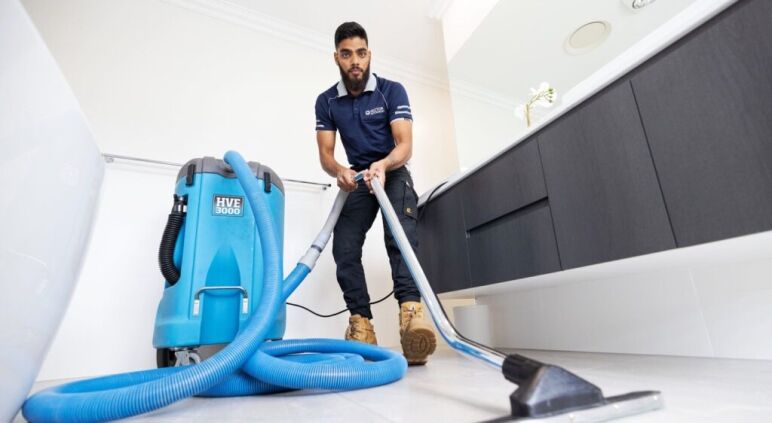
Emergency water extraction removes standing water and excess water from affected floors and materials. It can help limit further damage, but it is usually the first part of a restoration plan. A carpet that feels drier on top may still have wet underlay or flooring beneath it.
If water has entered your home or workplace, tell Reztor what happened, which areas are affected and whether the property can be accessed safely. Call 1800 739 867 to discuss availability and the next steps.
Put safety before clean-up
Keep people away from unsafe areas. Do not touch water-damaged switchboards or electrical equipment, and arrange a licensed electrician where electrical safety is uncertain. See the Queensland Electrical Safety Office’s storm and flood safety guidance. If there is immediate danger, contact emergency services.
Tell the restoration team if the water may contain sewage or other contamination, or if ceilings, floors or access routes appear damaged. Do not enter a flooded area just to inspect it or take photographs. The source of the water and any ongoing leak also need attention from the appropriate service or trade.
What happens during water extraction?
The work depends on the water source, affected materials, access and the condition of the property. A typical assessment and recovery plan may include:
- Assessing the affected areas. The team checks the visible damage and uses suitable moisture checks to help establish the extent of the problem. Hidden spaces may need further investigation.
- Removing accessible water. Suitable extraction equipment removes standing water and excess water from materials that can be treated. The method is chosen for the property and the condition of the water.
- Deciding what can be retained. Carpet, underlay, flooring and other materials are assessed individually. Extraction does not mean every item is suitable for cleaning and drying.
- Planning drying and cleaning. Remaining moisture, contamination and access determine the next work. Some areas may need specialist cleaning or removal of affected materials.
- Checking progress. Further moisture readings help the team review the drying process and discuss any change in scope.
Why drying may still be needed afterwards
Removing visible water does not establish that a building is dry. Moisture can remain in underlay, subfloors, walls and other materials. Depending on the assessment, a structural drying plan may use drying and dehumidification equipment with follow-up checks.
The time required varies with the materials, amount of water, access and site conditions. There is no reliable fixed drying time for every property. Ask what will be monitored and how the team will decide when equipment can be removed.
How extraction differs from mitigation and repairs
Water extraction is one part of mitigation: the work intended to limit further loss after water damage. Assessment, extraction, cleaning, drying and decisions about affected materials may overlap as the situation develops.
Restoration work is also distinct from fixing the original plumbing fault or rebuilding damaged areas. Plumbing, electrical work and building repairs may need to be arranged separately with the appropriate trades. Agree on the scope so you know which work is included and which decisions remain outstanding.
What to tell Reztor when you call
- Your suburb, property type and the best contact number.
- When the water was first noticed and whether it is still entering.
- The rooms and materials affected, as far as you can tell safely.
- Any known contamination, electrical concerns or access restrictions.
Reztor’s own team carries out our restoration work; we do not subcontract it. We take enquiries 24/7 and confirm availability and expected arrival for your location. Arrival depends on safe access, location and current demand.
Read about our water extraction service or send an enquiry. For an active water incident, call 1800 739 867 to discuss the situation with our team.