
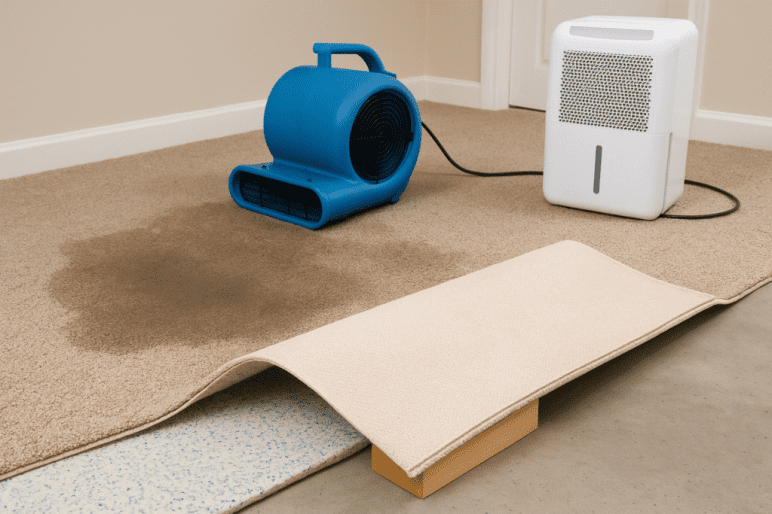
Start by deciding whether the situation is suitable for DIY action. A small, recent spill from a known clean-water source is different from flooding, sewage, visible mould or water near electrical equipment. The steps below explain initial actions and when to arrange an assessment; they do not establish that a carpet is safe to keep.
Guidance reviewed 28 September 2026.
1. Check electrical safety before using equipment
Do not touch a water-damaged switchboard or use water-affected electrical equipment. If wiring, appliances or the electrical supply may be affected, keep away and arrange a licensed electrician before using powered drying equipment. Queensland’s Electrical Safety Office explains these precautions in its storm and flood electrical-safety guidance.
2. Identify the water source and stop if it may be contaminated
If sewage, floodwater or another potentially contaminated source is involved, arrange experienced professional help. Do not begin fan drying when the water source is uncertain. The EPA’s water-damage drying guidance applies its drying methods to clean water and cautions against fan use before that is established.
Tell the person assessing the damage when you first noticed it and whether water is still entering. Repairing the leak may require a separate plumber or other qualified trade.
3. Remove a small clean-water spill carefully
For a minor, recent clean-water spill in an electrically safe area, blot up accessible surface water with clean towels. If using a vacuum, it must be a suitable wet-extraction machine used according to its instructions, not an ordinary dry household vacuum. Extraction removes water but does not by itself dry the carpet and the layers beneath it.
4. Use airflow only when the conditions are suitable
For clean-water damage with no suspected mould contamination and a safe electrical setup, suitable airflow and dehumidification can assist drying. Follow equipment instructions. If the source, extent of damage or equipment setup is uncertain, get advice before proceeding. See the EPA drying guidance linked above.
5. Include the underlay and floor in the assessment
Do not assume that a dry-feeling carpet surface means its backing, underlay or subfloor is dry. Ask whether those layers need access, lifting, removal or moisture checks. Avoid relaying underlay simply because it looks dry.
If carpet has become mouldy, drying alone may not resolve the problem. Porous materials can be difficult to clean fully and may require replacement, as explained in the EPA’s home mould-cleanup guidance.
6. Do not treat disinfectant as a drying solution
Do not apply household disinfectant to carpet as a blanket mould-prevention step. A chemical treatment does not replace moisture control or appropriate cleaning and removal. The EPA does not recommend routine biocide use for mould cleanup; its guidance on bleach and biocides also explains why killing mould alone is insufficient. Never mix cleaning chemicals, and follow product labels where a treatment is appropriate.
7. Arrange assessment when the outcome is uncertain
Seek help if water has spread beyond a small spill, affected walls or adjacent rooms, or left ongoing dampness, odour or suspected mould. Do not wait for a fixed deadline before making an enquiry. Explain what happened, what you have already done and which materials are affected.
Discuss wet carpet with Reztor’s own team
Reztor carries out its restoration work in-house and does not subcontract it. We can discuss assessment, extraction and drying, with any separate plumbing, electrical or building repairs identified as distinct work. Carpet salvage, drying duration and insurance payment cannot be promised from an online description.
Read about our wet carpet drying service and how structural drying works. To discuss availability for your address, call 1800 739 867 or send details and photos.