
Basement water damage repair involves two connected questions: what has become wet, and why water entered the building. Removing visible water alone does not resolve an ongoing leak or establish that concealed materials are dry. This guide explains the assessment, drying and repair decisions to discuss after an incident.
Put safety before investigating the damage
Keep clear of standing water where electrical hazards may be present, and do not enter an unsafe basement to take photographs or retrieve belongings. Queensland Health advises that anything in contact with floodwater should be assumed contaminated. Follow emergency-service instructions and seek appropriate electrical or building advice before access or cleanup.
1. Identify the source of water ingress
Tell the assessment team whether the problem followed rain, a plumbing failure or a recurring damp patch. Record when it began and whether water is still entering. Investigation may involve a plumber, drainage specialist or building professional as well as a water-damage restoration team. Ask who will address the source and what remains uncertain.
2. Plan water removal and monitored drying
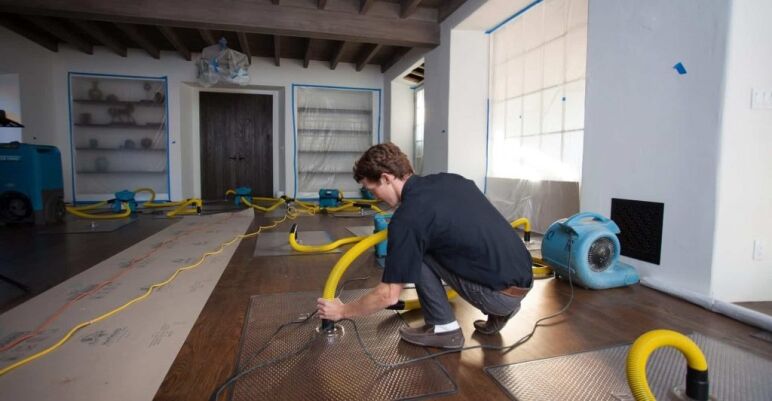
Water extraction removes accessible water using methods suited to the conditions. Moisture remaining in flooring, walls or concealed layers may need further assessment and controlled drying. Ask how progress will be measured rather than relying on the appearance of a surface. Read how structural drying works for the monitoring process.
3. Match cleaning to the contamination
The water source and affected materials help determine the cleaning approach. The EPA recommends experienced professional help for sewage or other contaminated-water damage. Some porous materials may not be suitable for cleaning and retention. Discuss any existing mould or persistent odour before disturbing the area; a fresh smell does not demonstrate that the underlying issue has been resolved.
4. Have structural and repair concerns assessed
Point out cracks, movement, damaged finishes and previous repairs. A suitable building professional can advise on structural concerns and repair requirements. Clarify which work is restoration, which work needs another trade and what approvals or access are required. Do not assume that applying a surface sealant will address the source of water entry.
5. Review drainage with the appropriate specialist
Ask a qualified drainage or building professional to assess recurring water entry before choosing a pump, drain or waterproofing system. Useful questions include where the water comes from, how the proposed work addresses it, what maintenance is needed and what limitations remain. A restoration plan and a long-term drainage solution may be separate scopes of work.
6. Manage moisture after the initial cleanup
Moisture control matters after visible water has gone. The EPA identifies leaks, condensation and damp materials as issues to address. Discuss whether drying, ventilation or humidity management is appropriate for the assessed conditions. Equipment should support a plan that deals with the moisture problem, rather than substitute for finding its source.
7. Keep records and review recurring changes
Keep the incident date, safe photographs, assessment findings and agreed work scope together. If dampness, staining or an odour returns, record when and where it happens and raise it with the relevant professional. Ask what follow-up checks are recommended for your property.
Discuss the next step with Reztor
For restoration advice, send the property location, incident details and safe photos. If the situation is urgent, call 1800 739 867 rather than waiting for a form reply. The team can discuss assessment and restoration options; specialist repairs, timing and material retention depend on the findings and agreed scope.
For broader context, see our water-damage repair guide.