
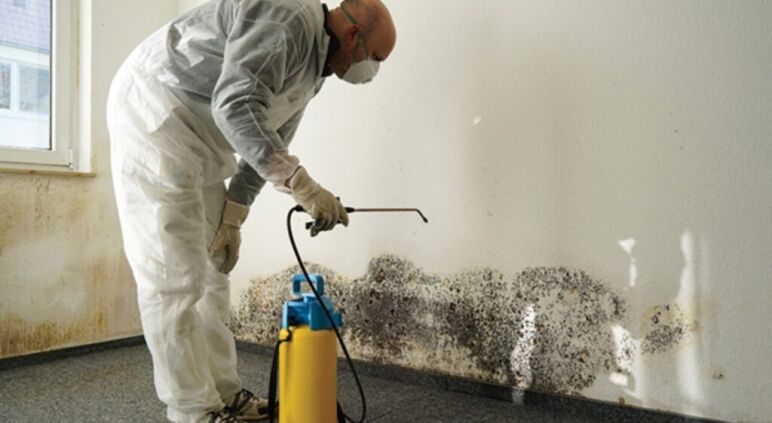
A musty odour can remain after visible mould has been cleaned, especially in bathrooms, laundries and other rooms that stay humid. The odour is usually a sign that moisture, or growth in a concealed material, still needs attention — not a diagnosis of a particular type of mould.
This page explains practical next steps for mould odours. It is not a medical guide. For health concerns, talk to a doctor. NSW Health has public information on mould and dampness in the home.
Why the smell can linger
If the moisture source is still there — a leak, poor ventilation, wet underlay or damp plasterboard — cleaning a surface may not be enough. Odour can also come from growth inside a porous material that has not been removed or thoroughly dried.
What to do
- Find and fix the moisture source, and ventilate the room if it is safe to do so.
- Check concealed areas: behind furniture, under carpets, in wall bases and around wet fittings.
- For a small patch on a hard, non-porous surface, careful cleaning may help if it is safe — see how to get rid of black mould.
- If the smell returns, the area is large, or porous materials are involved, have the property assessed.
Your insurer decides cover. Reztor documents the work; the insurer decides cover.
We assess the moisture, contain and remove affected material as agreed, and record the work. We do not guarantee a health outcome. Reztor’s own team works across Queensland, New South Wales and Victoria. Call 1800 739 867, day or night. We’ll confirm attendance time for your address when you call.